


For decades, “Made in America” has been associated with where a product is manufactured.
In the defense industry, that definition is becoming much more consequential.
The conversation is increasingly moving beyond final assembly toward a deeper question: Who controls the technology, the engineering, the critical components, and the ability to manufacture and sustain it when it matters most?
Recent shifts in U.S. defense and trade policy are putting greater emphasis on domestic sourcing, supply-chain visibility, manufacturing capacity, and the availability of critical technologies at home.
For companies supplying mission-critical technology, the implications are clear.
Where something is engineered and how securely it can be produced are becoming part of the mission.

The Supply Chain Is Now Part of the System
A defense solution is only as resilient as the supply chain behind it. If critical components become unavailable or compromised, production cannot scale – or – key capabilities depend on vulnerable overseas suppliers, and the risk quickly becomes a readiness issue.
Availability of uncompromised parts, traceability, manufacturing capacity, and control over critical technology are becoming increasingly important.
A Changing Manufacturing Environment
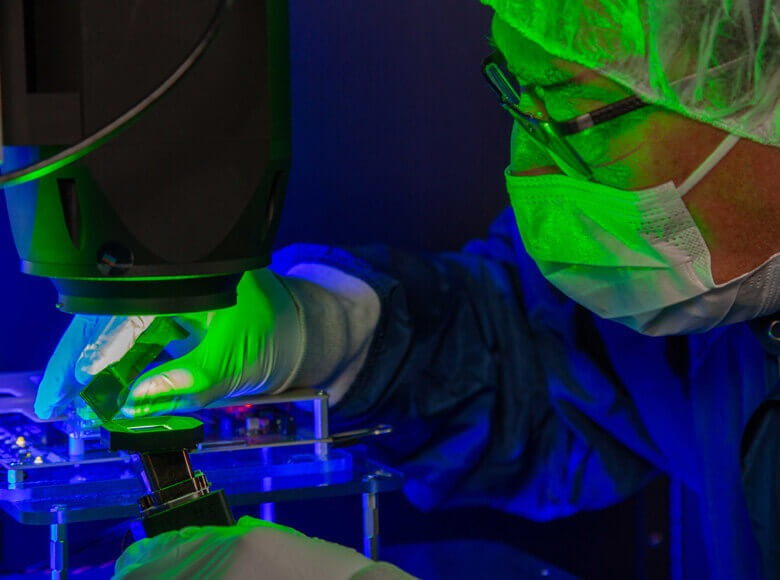
The policy environment is reinforcing this shift. In 2026, federal actions have placed greater emphasis on securing critical defense supply chains, strengthening domestic production, and increasing visibility across supplier networks. The new policy also prioritizes domestic and allied sourcing of critical materials and components.
For the defense industrial base, this extends beyond any single tariff or procurement rule. Technical and manufacturing capability are becoming increasingly interconnected. Inventing the technology is only part of the equation. The ability to build, qualify, scale, sustain, and understand where its critical inputs originate is becoming just as important.
Beyond the “Made in USA” Label
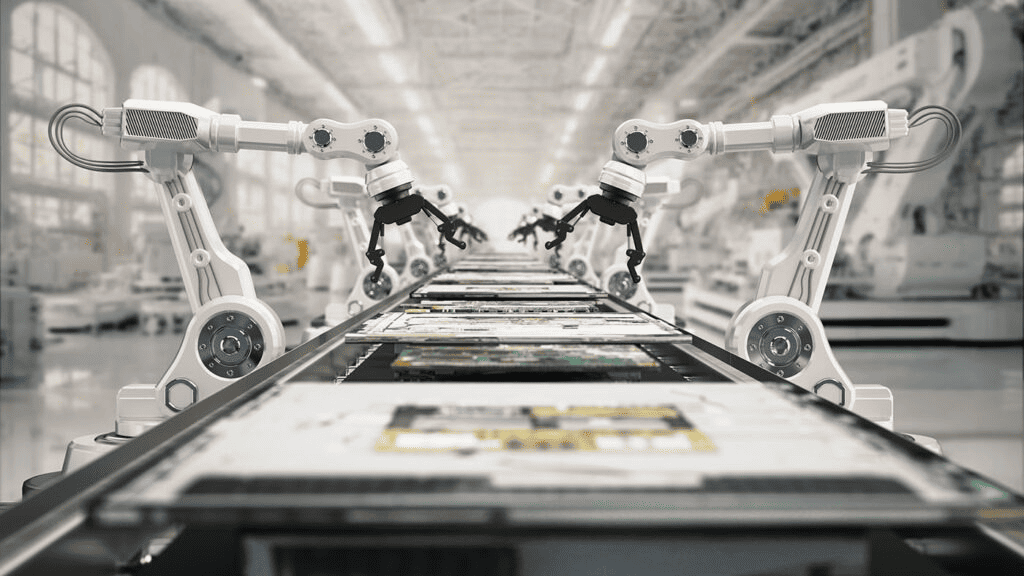
This is where the distinction between domestic assembly and true domestic capability matters. A product can be assembled in the United States while still relying heavily on technology, components, engineering, or production capacity controlled elsewhere.
For mission-critical systems, domestic capability goes much deeper. It requires the engineering expertise to design and evolve the technology, manufacturing infrastructure capable of meeting demanding specifications, rigorous testing and qualification, and the knowledge, equipment, processes, and supplier relationships needed to sustain production throughout the lifecycle of a defense program. That represents a much higher standard than simply placing a label on the finished product.
Why Kopin Is Different
For Kopin, domestic capability has been built over decades.
Our work spans the technologies that sit directly between information and the human operator: microdisplays, optics, electronics, packaging, and integrated vision systems engineered for demanding applications.
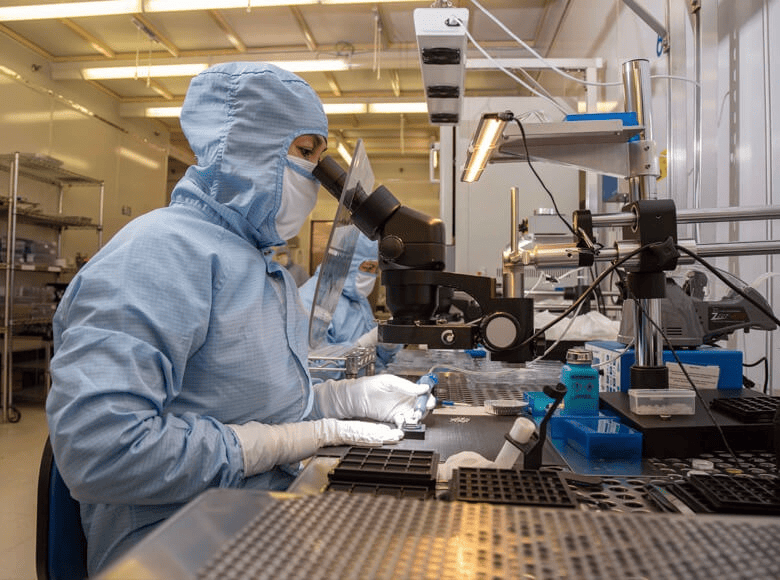
Kopin maintains U.S.-based engineering and manufacturing capabilities, including specialized cleanroom infrastructure, and has delivered more than 400,000 defense vision systems across generations of mission-critical programs.
That foundation allows us to approach domestic manufacturing as more than final assembly.
Engineering, optical design, display technology, testing, integration, and manufacturability are considered together from the beginning.
That matters when systems need to perform in aircraft cockpits, thermal weapon sights, soldier-worn augmented reality systems, first person viewer (FPV) platforms, and other environments where reliability is not negotiable.
Building the Next Generation at Home
That domestic foundation is increasingly important as Kopin develops the next generation of application specific optical solutions. Through its $15.4 million IBAS award, Kopin is advancing ultra-bright, full-color MicroLED technology and scalable U.S.-based manufacturing for future soldier AR and AI infrastructure applications.
Building on that momentum, Kopin has secured an additional $18.6 million in IBAS-related funding, further strengthening its commitment to domestic innovation and manufacturing capabilities.
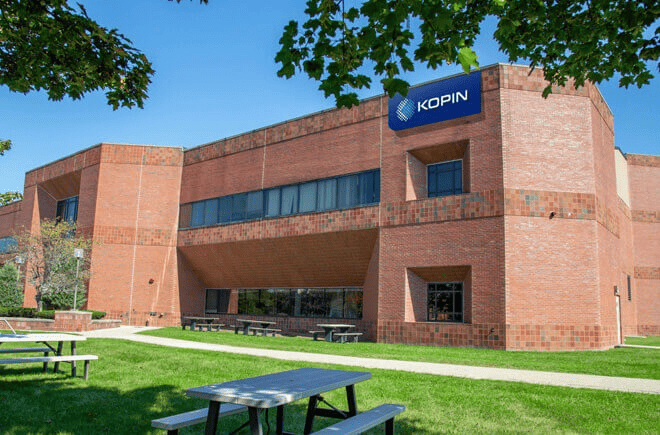
Kopin is also expanding its presence in Westborough, Massachusetts, with plans for a new headquarters building adjacent to its existing operations, supported in part by tax incentives. This expansion reflects continued investment in the infrastructure needed to support long-term growth and U.S.-based operations.

Vision Beyond
The meaning of “Made in America” is evolving.
For mission-critical technology, it represents more than geography. It represents resilience, accountability, technical ownership, and the ability to respond as demands change.
At Kopin, those capabilities have been built into our approach for decades. As the defense industrial base enters a new era of domestic investment and supply-chain scrutiny, that foundation matters more than ever.
Built here. Engineered for the mission. Ready for what comes next.
Explore Kopin’s mission-critical vision technologies and U.S.-based engineering capabilities and contact us today.